

Elaphe Successfully Completes IPCEI ME/CT – MEEV Project: Two Breakthrough Technologies for Greater Electric Vehicle Range
Ljubljana, June 2026
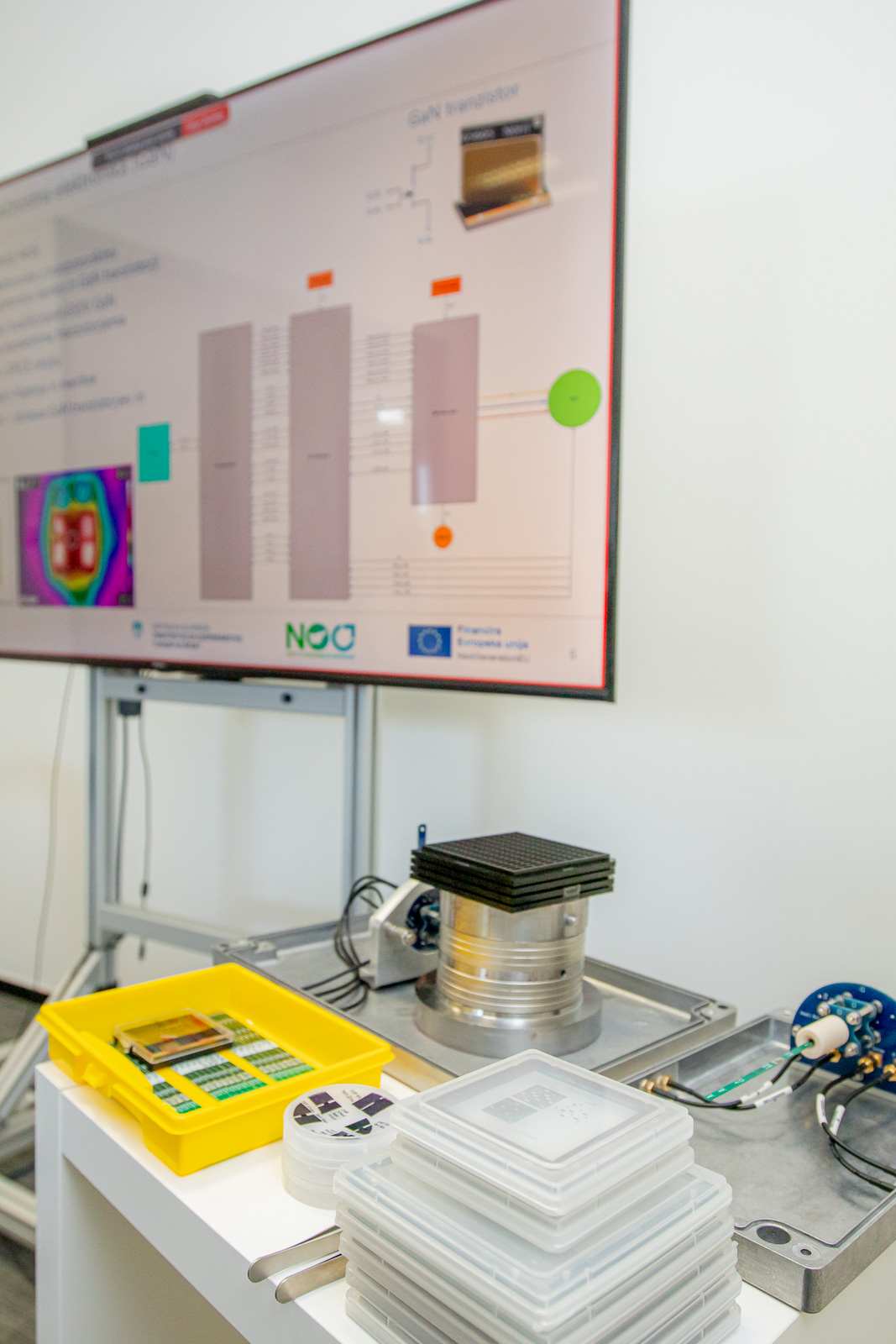
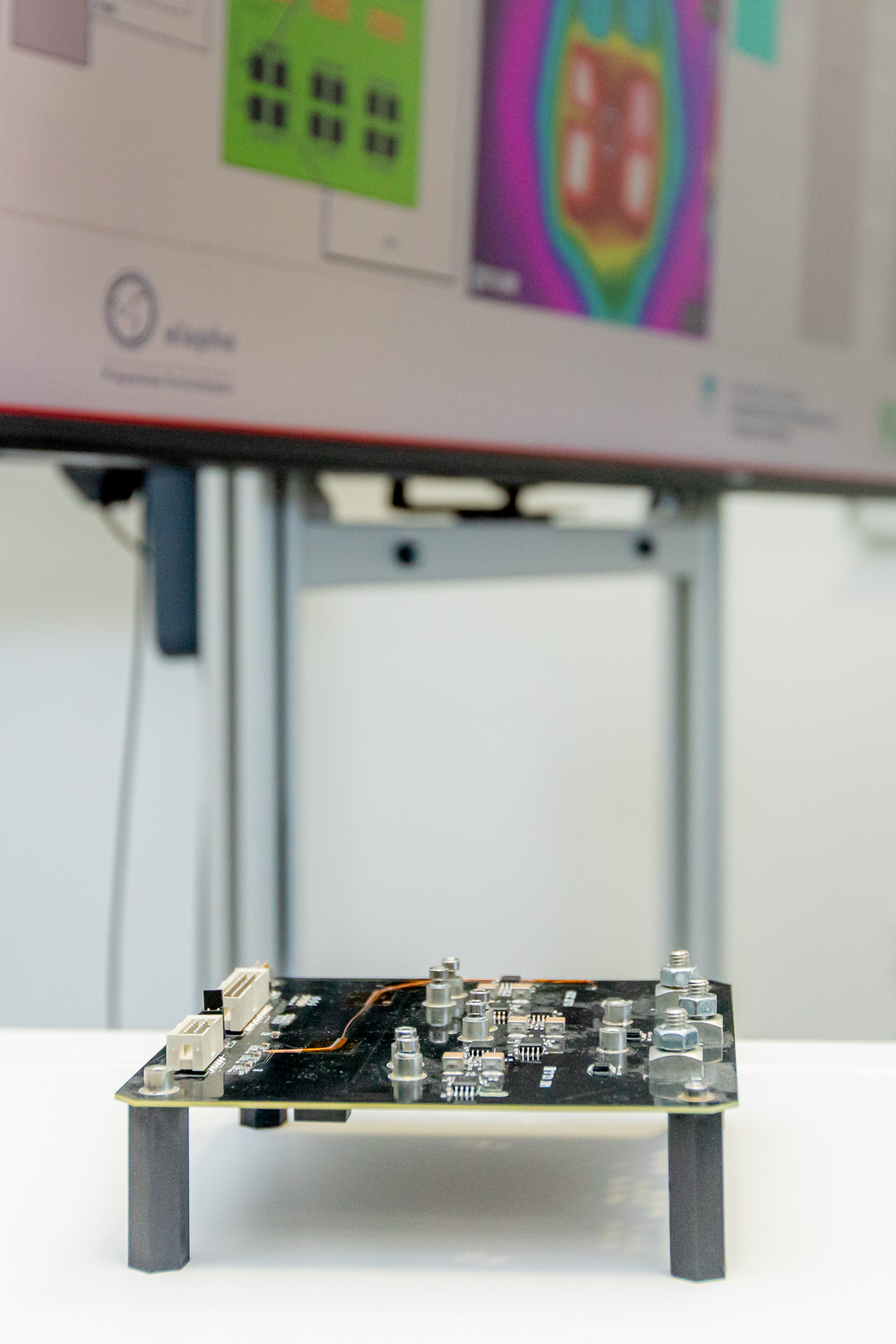
Elaphe has successfully completed the MEEV (Micro-Electronics for Electric Vehicles) project under the pan-European initiative IPCEI ME/CT (Important Project of Common European Interest – Microelectronics and Communication Technologies). Running from 1 January 2023 to 30 June 2026, the project delivered two semiconductor breakthroughs aimed at increasing the efficiency and range of electric vehicles — and was co-financed by the European Union – NextGenerationEU under Slovenia’s Recovery and Resilience Plan.
Project Objectives
In an electric vehicle, every watt and every gram matters. The MEEV project addressed two fundamental challenges in EV power efficiency:
Sub-project 1 — Gallium Nitride (GaN) Power Electronics: Develop and validate next-generation power electronics based on GaN technology capable of operating at significantly higher switching frequencies than silicon-based alternatives, reducing component size and weight, minimising thermal losses, and enabling greater vehicle range or smaller, more affordable batteries.
Sub-project 2 — Gallium Arsenide (GaAs) Thermoelectric converter: Design a novel GaAs chip intended to convert waste heat back into useful electrical energy — with no moving parts and without requiring a temperature differential, unlike conventional thermoelectric converters.
Achieved Results & Key Performance Indicators
All key performance indicators (KPIs) were met or exceeded:
| Description | Baseline (2023) | Target (2026) | Achieved (2026) | |
| KPI 1 | Switching frequency — Sub-project 1 | 16 kHz | 60 kHz | 150 kHz |
| KPI 2 | Number of tested chip geometries — Sub-project 2 | 1 | 4 | 4.5 |
| KPI 3 | Gate leakage current — Sub-project 2 | > 1 µA | < 200 nA | < 15 nA |
| KPI 4 | Channel modulation — Sub-project 2 | 0% | > 30% | 34% |
For Sub-project 1, Elaphe’s engineers achieved a switching frequency of 150 kHz — more than twice the project target of 60 kHz and nearly ten times the capability of conventional silicon technology. The result is protected by patent.
For Sub-project 2, four prototype chip geometries were designed and measured, with all KPIs achieved. A novel measurement method for determining electron mobility and density was developed alongside the chip work. A stencil mask aligner built during the project remains available to all users at IOM-CNR in Trieste and to external partners.
All developed technologies are protected by patents and semiconductor topography registrations, and are available for licensing to any interested company in the European Economic Area on a non-exclusive, non-discriminatory basis.
Project Financing
| Duration | 1 January 2023 – 30 June 2026 |
| Total project value | €1.499.514,20 EUR |
| EU co-financing (NextGenerationEU / NOO) | €749.757,10 (50%) |
| State aid scheme | BE06-2632616-2024 |
| National implementing body | Ministry of Economy, Tourism and Sport (MGTŠ) |
Financira Evropska unija – NextGenerationEU
Further information: evropskasredstva.si | MGTŠ
Media Coverage